Is Roatán a Blue Zone? Not Yet—But It May Be the Caribbean’s Next Longevity Destination
Understanding Blue Zones—and where Roatán fits
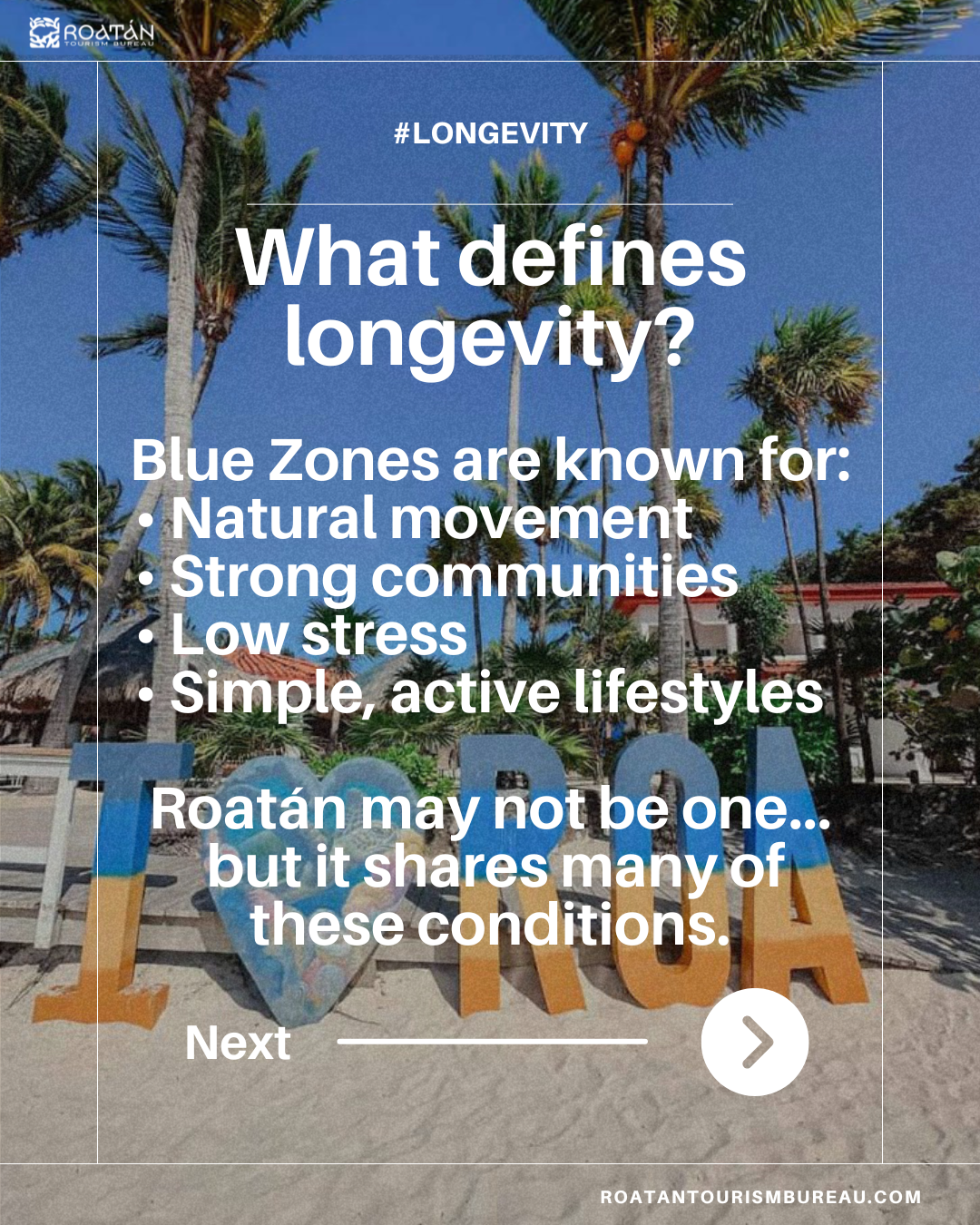
The term “Blue Zone” refers to a small number of regions around the world where people consistently live longer, healthier lives—often reaching 90 or even 100 years of age. These regions, such as the Nicoya Peninsula in Costa Rica or Okinawa in Japan, are defined by a combination of lifestyle, environment, diet, and strong social structures.
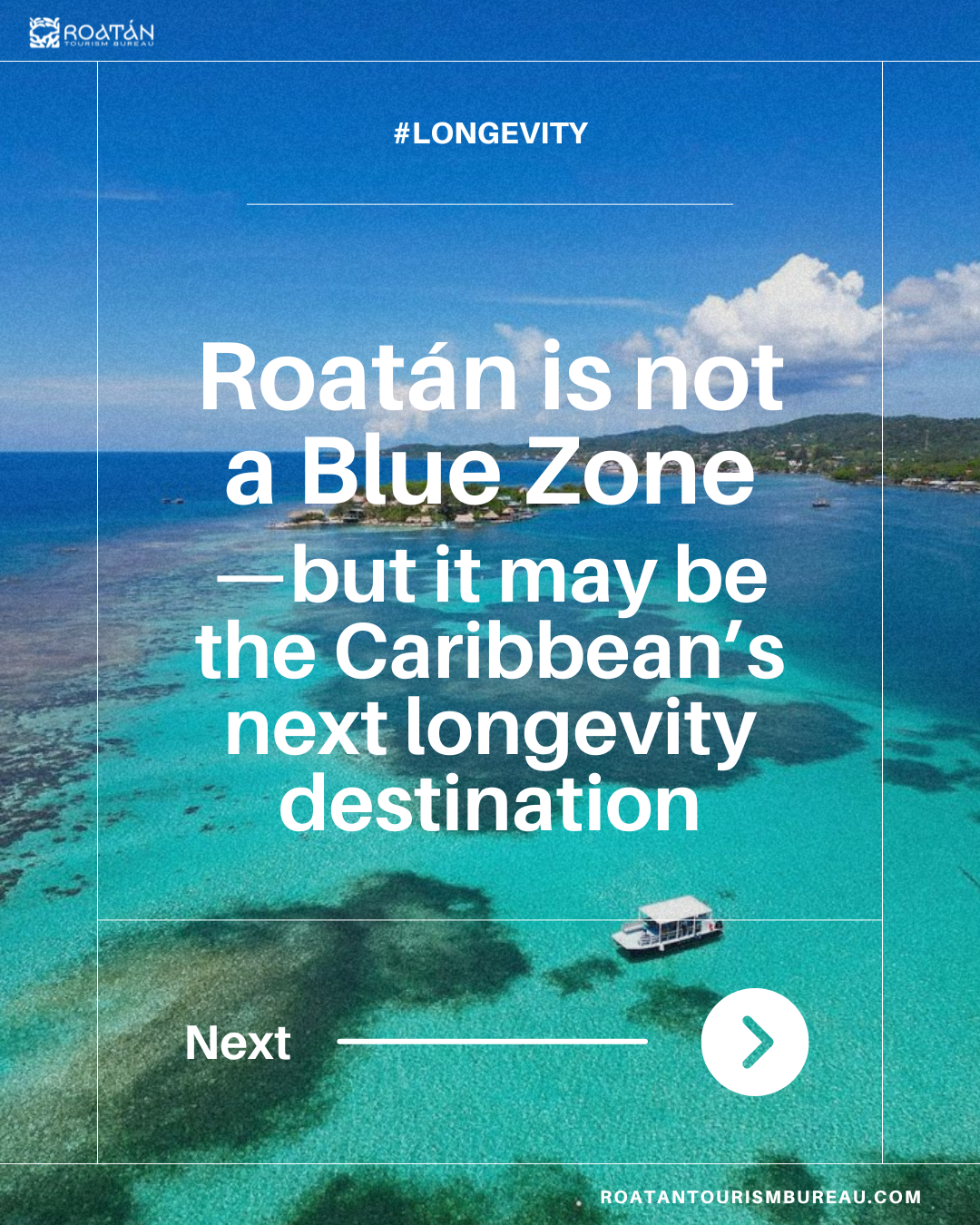
Roatán is not officially recognized as a Blue Zone. There is currently no scientific classification placing the island among these longevity hotspots.
However, focusing only on that label misses a more important—and more strategic—reality: Roatán already embodies many of the environmental and lifestyle conditions associated with longevity.
The rise of “longevity destinations”
Globally, a new category is emerging: longevity destinations—places where people travel, live, or invest not just for leisure, but to enhance their long-term health and quality of life.
In this context, Roatán stands out. Rather than being defined by historical longevity data, the island is increasingly aligned with what can be described as a “longevity climate”—a set of natural and social conditions that support well-being over time.
A Caribbean climate designed for longevity
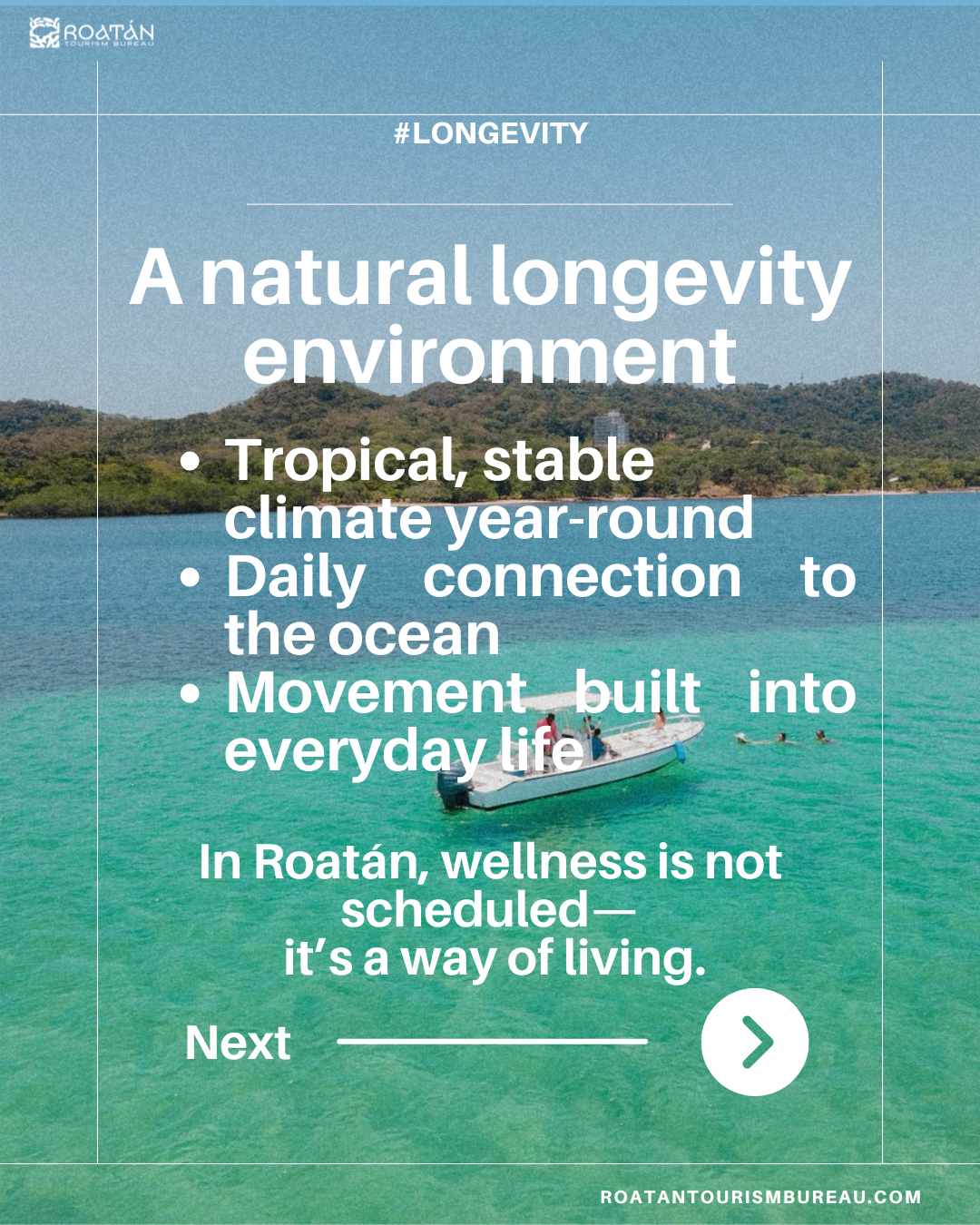
One of Roatán’s strongest advantages is its tropical, stable climate. Warm temperatures year-round, abundant sunlight, and access to the outdoors encourage a lifestyle that naturally integrates movement and exposure to nature.
Unlike urban environments where exercise is often structured and artificial, life in Roatán promotes organic physical activity—walking along the coast, swimming, diving, and engaging with the ocean daily.
This mirrors one of the key principles observed in Blue Zones: people don’t “work out”—they simply live actively.
Movement, ocean, and “blue health”
Roatán’s identity is inseparable from the sea. Located along the Mesoamerican Barrier Reef, the island offers constant access to marine environments that are increasingly recognized for their impact on mental and physical health.
This concept—often referred to as “blue health”—links proximity to water with reduced stress, improved mood, and enhanced overall well-being. Activities like snorkeling, diving, and ocean swimming are not occasional experiences here; they are part of everyday life.
Community, culture, and slower living
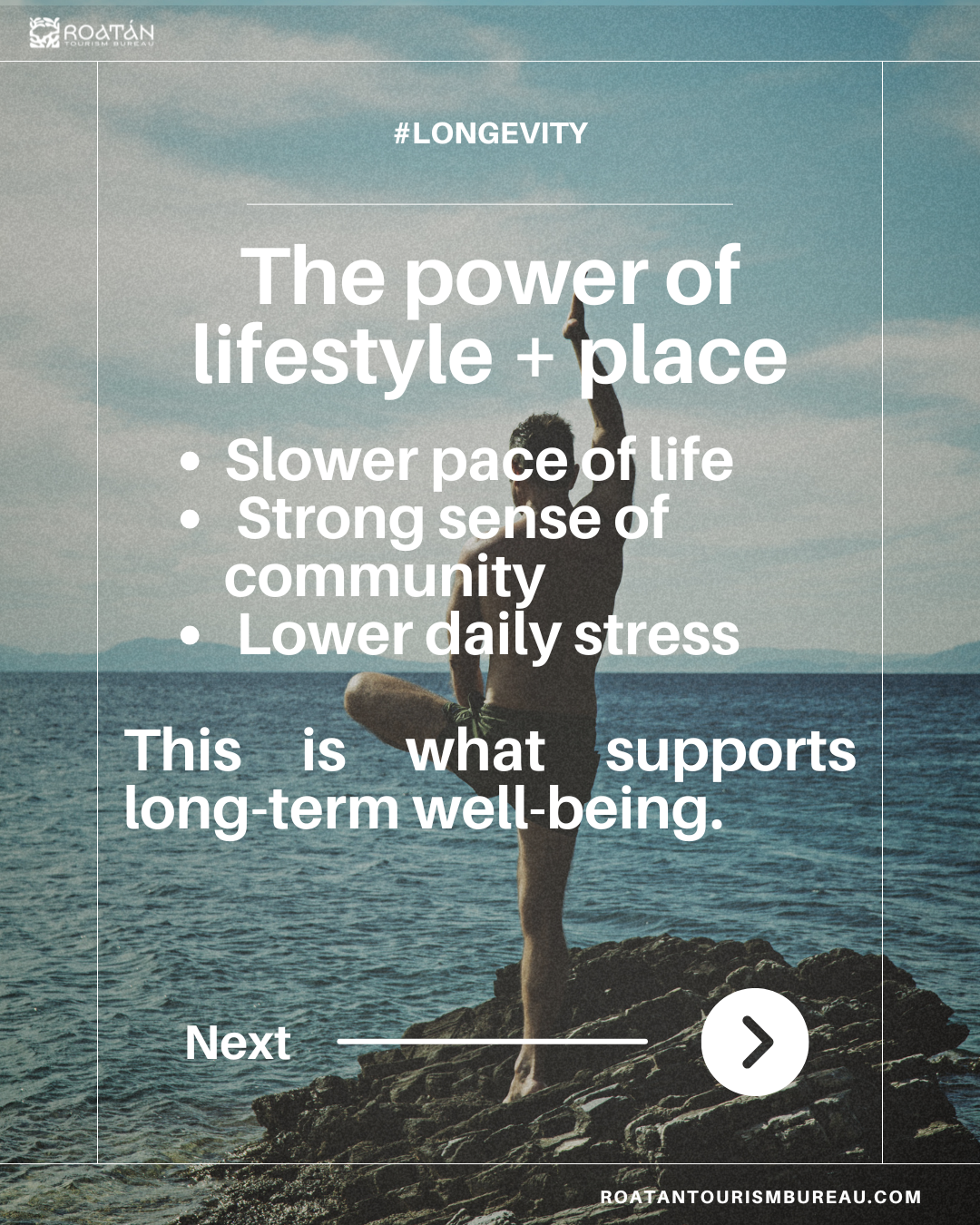
Longevity is not only biological—it is social. Strong relationships, cultural identity, and a sense of belonging are critical factors in long-term health.
In Roatán, community life remains central. From the traditions of the Garífuna people to the island’s close-knit neighborhoods, there is a natural emphasis on connection, shared experiences, and slower rhythms of living.
Compared to high-pressure urban centers, Roatán offers a lifestyle with reduced stress and greater balance, both of which are strongly associated with longevity outcomes.
From natural longevity to advanced health innovation
What makes Roatán particularly unique is that its natural advantages are now being complemented by emerging health and longevity technologies.
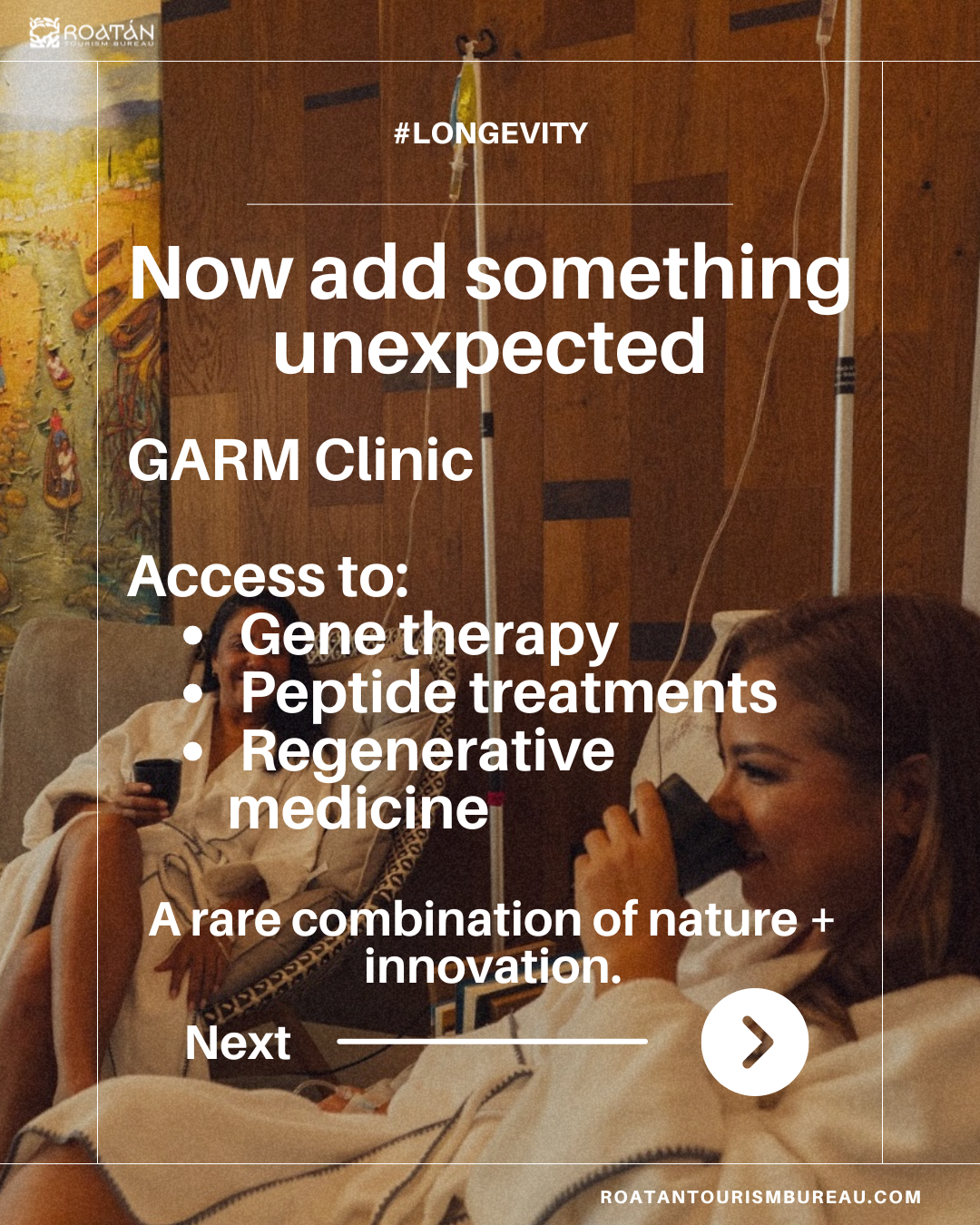
Institutions like GARM Clinic are introducing access to advanced treatments such as:
Gene therapy
Peptide-based therapies
Regenerative and preventative medicine
This combination—natural lifestyle + cutting-edge medical innovation—positions Roatán differently from traditional Blue Zones. Instead of relying solely on inherited longevity patterns, the island is becoming a place where people can actively design and optimize their healthspan.
A strategic position in the global longevity economy
The global longevity and wellness market is expanding rapidly, with increasing demand for destinations that offer more than relaxation. People are seeking places where they can live longer, healthier, and more intentional lives.
Roatán is uniquely positioned at the intersection of:
Tourism
Wellness
Innovation
Lifestyle migration
Its proximity to the Nicoya Peninsula—one of the world’s recognized Blue Zones—adds an additional layer of regional relevance. Together, Central America is emerging as a geographic corridor for longevity living.
Beyond tourism: living, working, and investing in longevity
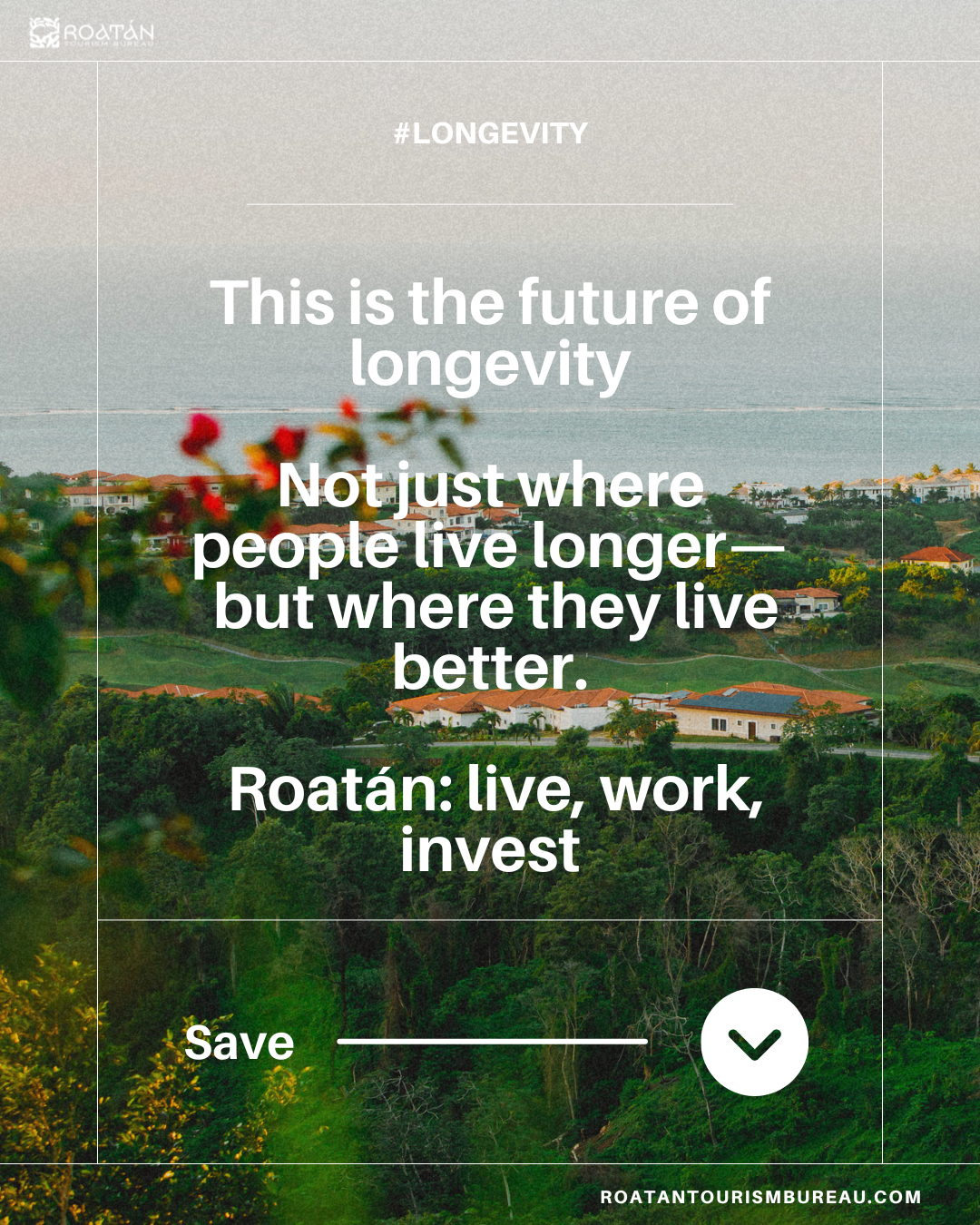
From the perspective of the Roatán Tourism Bureau, this evolution is critical. Roatán is no longer defined solely as a destination to visit—it is becoming a place to live, work, and invest.
The integration of wellness, medical innovation, and lifestyle infrastructure opens new opportunities for:
Long-stay visitors
Remote professionals
Health-focused investors
Retirement and longevity communities
Conclusion: Not a Blue Zone—but something more dynamic
Roatán may not carry the official designation of a Blue Zone, but it represents something equally compelling:
A next-generation longevity destination
By combining climate, community, ocean-based living, and access to advanced health technologies, Roatán is shaping a new narrative—one that moves beyond where people have lived long lives to where they can actively build them.