Roatán Intelligence Report | From High Demand to High Value Tourism
A defining moment for Roatán’s tourism strategy
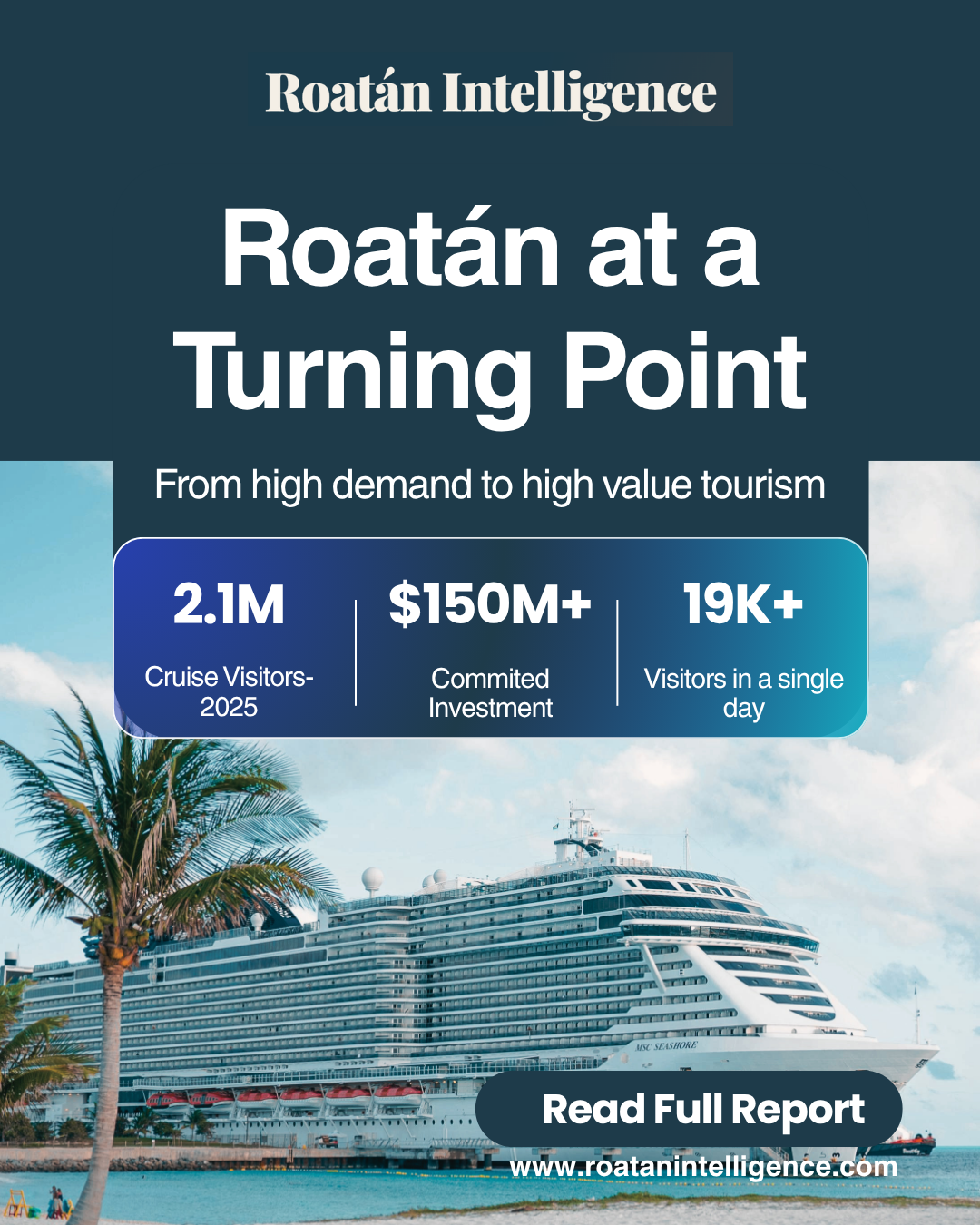
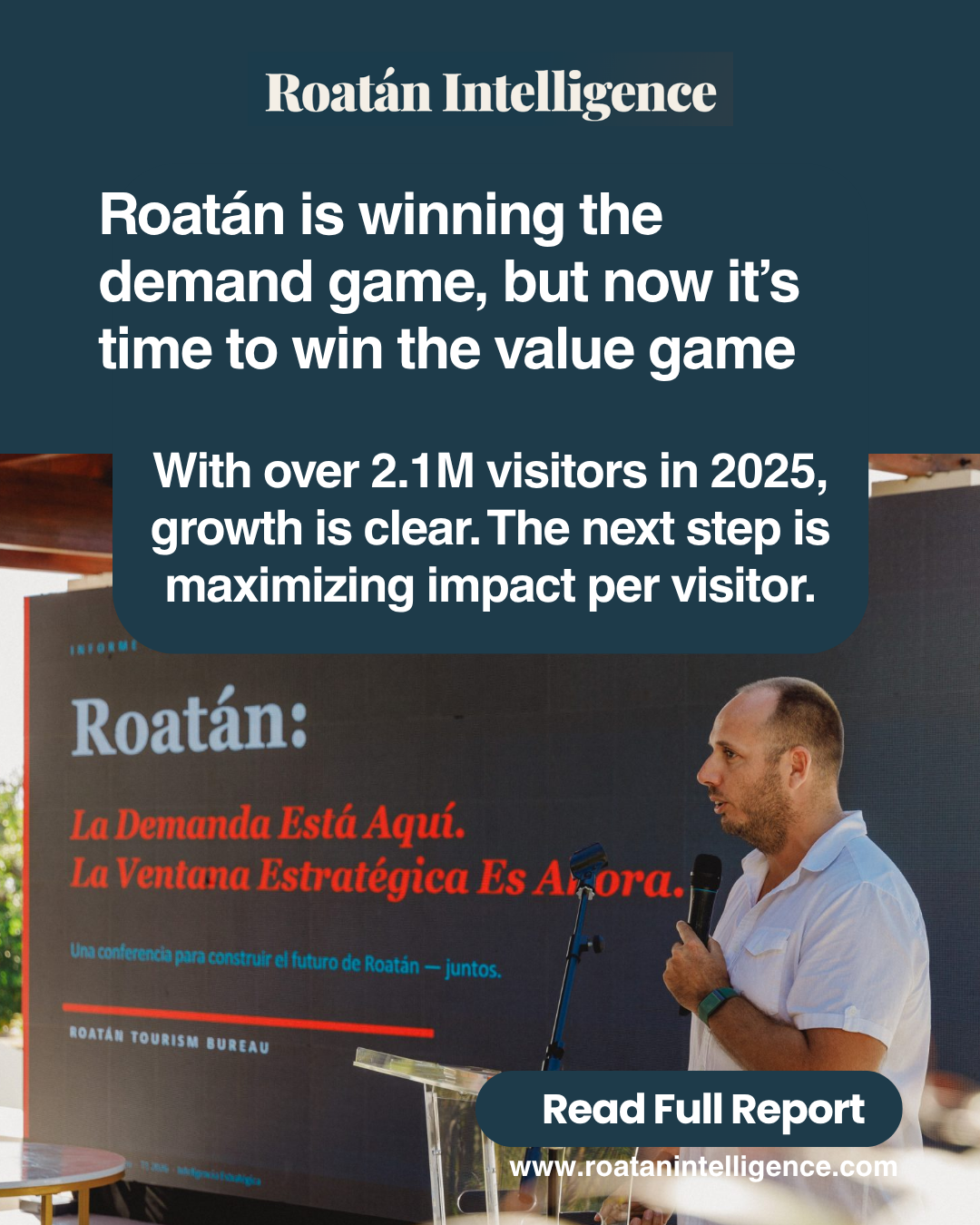
At the recent Roatán Inspira forum, Gonçalo Hall, director of the Roatán Tourism Bureau, delivered a strategic diagnosis that captured both the success and the underlying challenges of the island’s tourism model. His message was clear: Roatán is experiencing unprecedented growth in visitor demand, but it is not yet maximizing the value of that demand.
This analysis is part of the island’s first strategic intelligence report, offering a comprehensive look at tourism performance, challenges, and opportunities. The full report is available at 👉 https://roatanintelligence.com/
Backed by this data-driven approach, the message is both promising and complex: Roatán is no longer an emerging destination—it is already a global player. However, the next phase of its development will depend on how effectively it transitions from volume-driven tourism to value-driven growth.
Strong growth, but an imbalanced tourism model
The data presented highlights the scale of Roatán’s recent expansion. In 2025, the island welcomed approximately 2.1 million visitors, representing a 43% growth rate, alongside an investment pipeline exceeding $150 million. These figures confirm Roatán’s increasing relevance within the Caribbean tourism landscape.
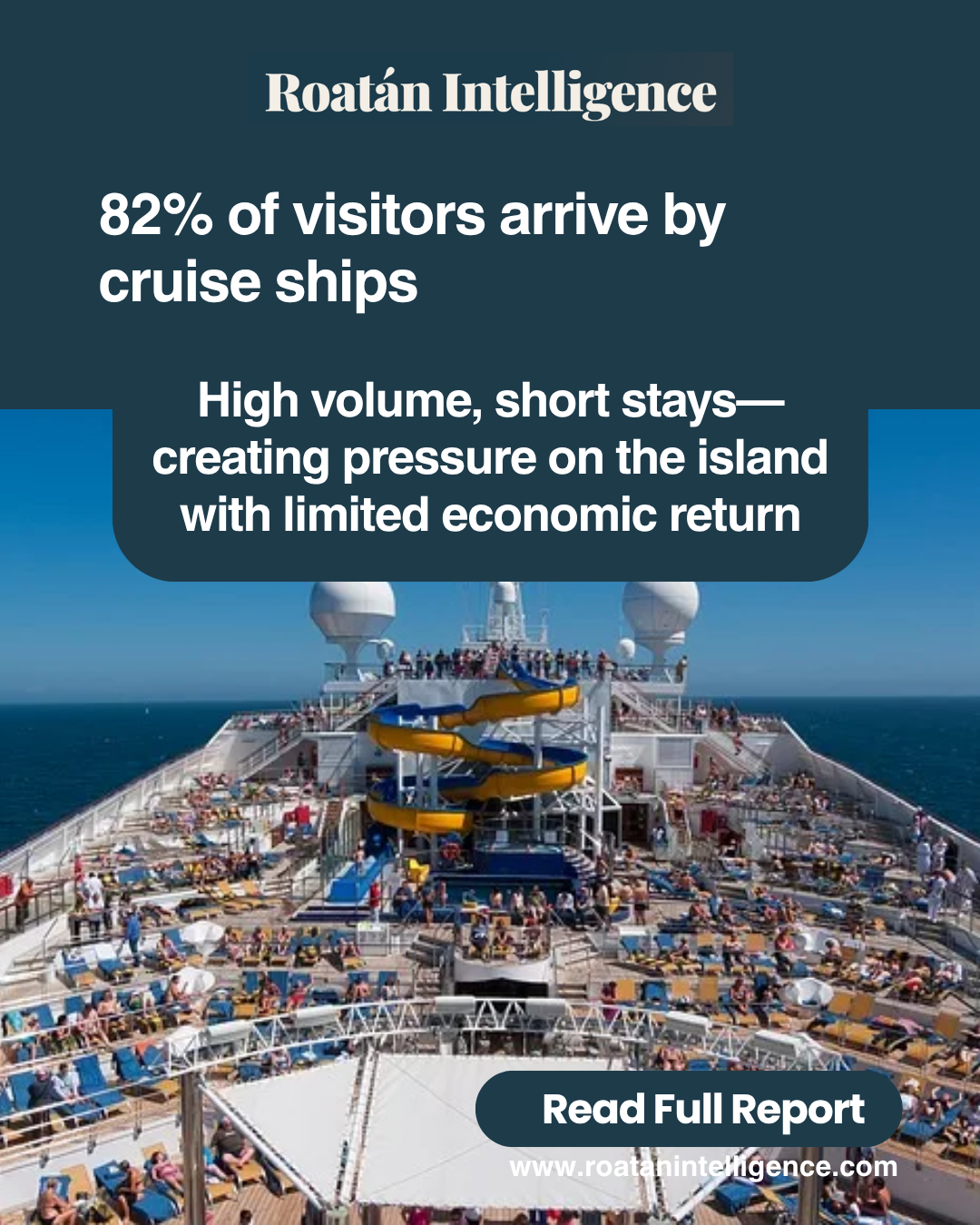
Yet, a closer look reveals a structural imbalance. Approximately 82% of visitors arrive via cruise ships, staying on the island for an average of six hours and generating an estimated $60 in spending per person. This model, while effective in driving volume, limits the broader economic impact on the destination.
As outlined in the Roatán Intelligence Report, this imbalance represents one of the most critical strategic challenges for the island moving forward.
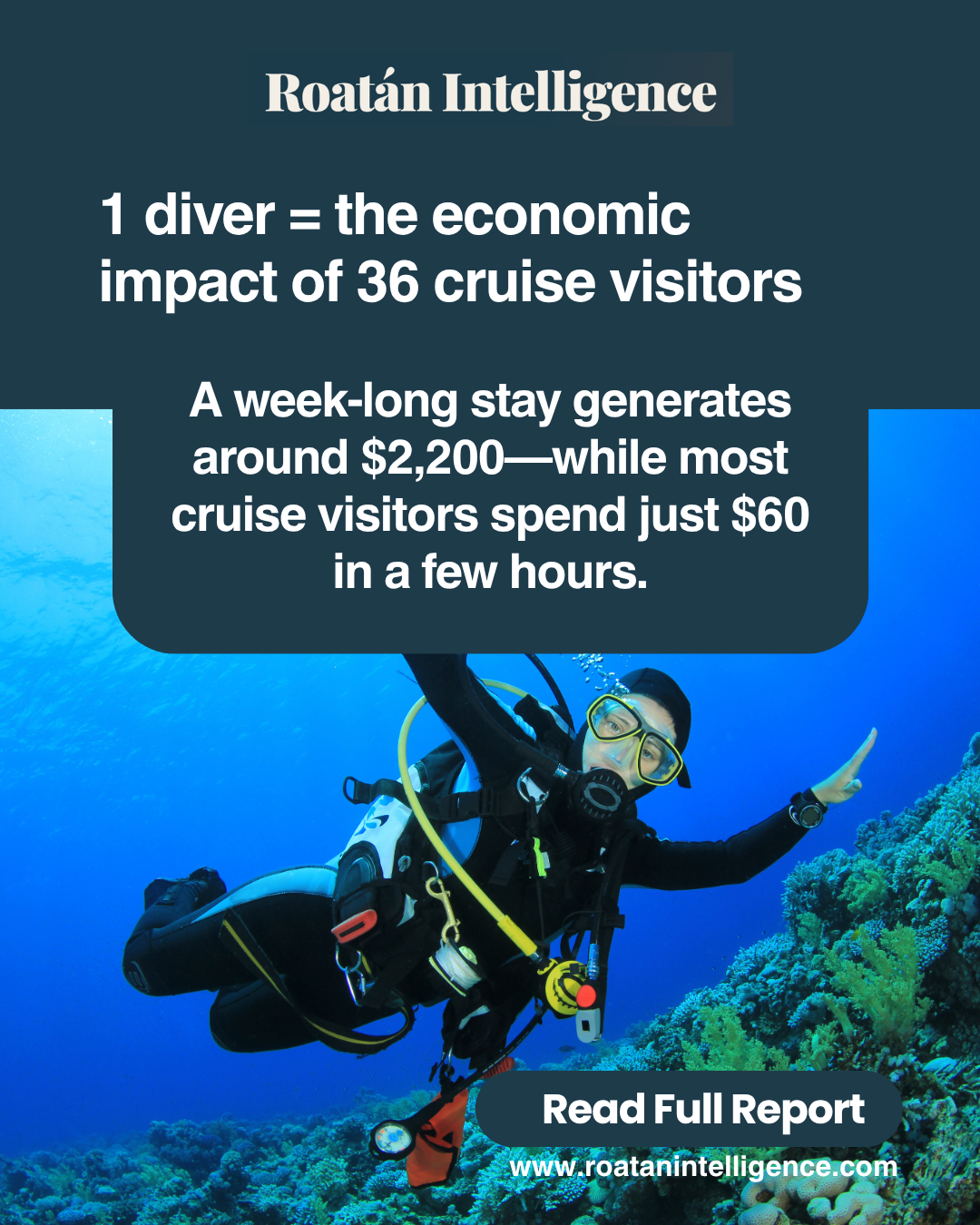
To illustrate the contrast, Hall introduced a compelling comparison: a single diver spending a week on the island generates approximately $2,200, equivalent to the spending of 36 cruise passengers. This comparison reframes the conversation—not as a rejection of cruise tourism, but as a call to diversify and elevate the visitor profile.
The cost of undervaluing the destination
Beyond economics, the discussion also addressed the environmental and cultural implications of the current model. High visitor turnover combined with low per-capita spending places pressure on local infrastructure and natural resources without generating proportional benefits.
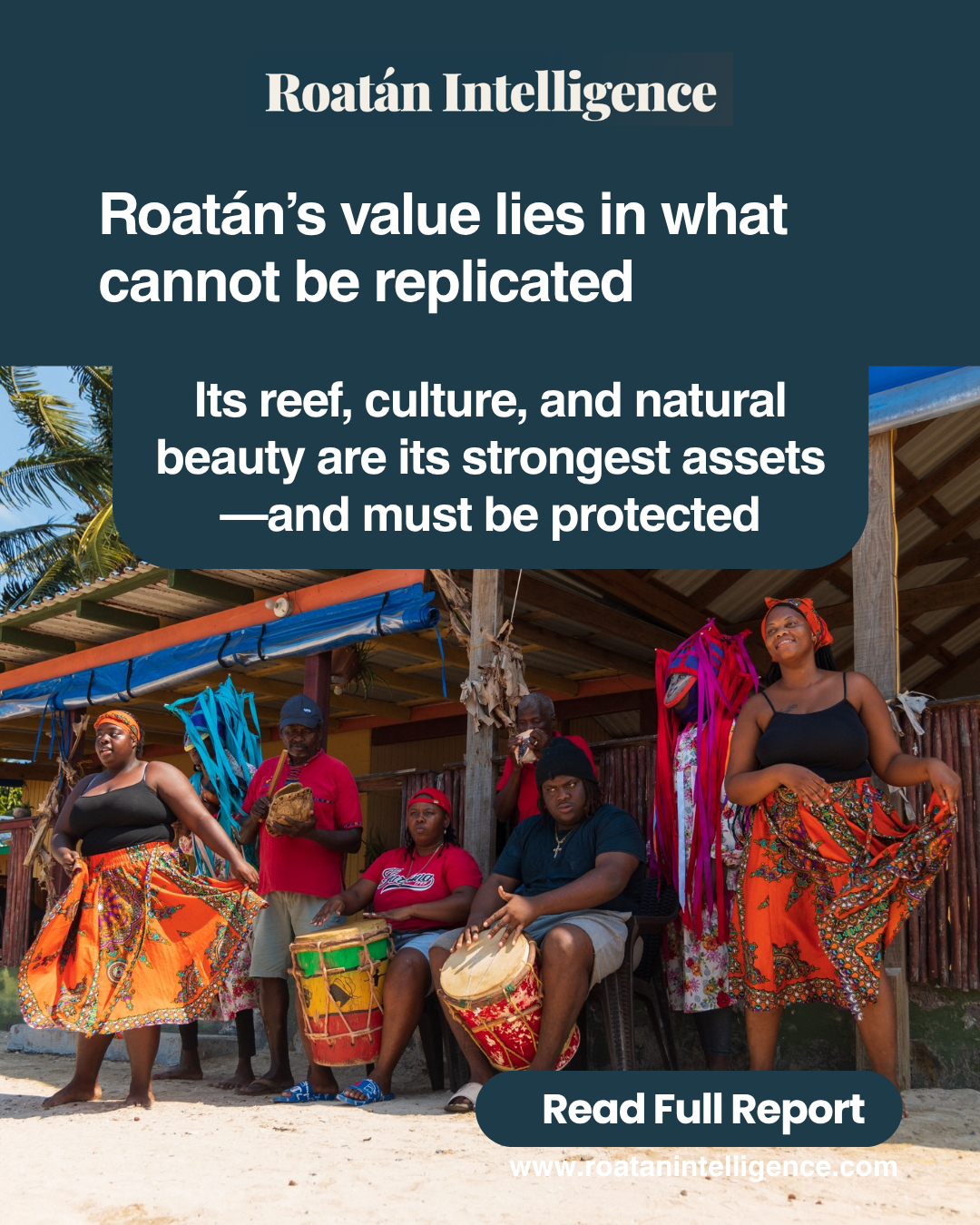
Hall summarized this tension with a direct observation: the island risks compromising its most valuable assets for relatively low economic return. Roatán’s coral reef ecosystems, its cultural identity—particularly the heritage of the Garífuna community—and its natural landscapes represent irreplaceable value.
The insights presented in the report reinforce the importance of aligning tourism growth with long-term sustainability and preservation.
The perception gap: narrative vs reality
One of the most critical challenges identified is not operational, but perceptual. Roatán continues to be evaluated through the broader lens of national statistics from Honduras, despite having tourism indicators—particularly in safety and visitor experience—comparable to destinations such as The Bahamas or Cancún.
This disconnect highlights a gap between reality and narrative. While the destination has evolved significantly in terms of infrastructure, offerings, and visitor experience, the global perception has not fully caught up. According to Hall, closing this gap will require coordinated marketing efforts, consistent messaging, and alignment across all stakeholders.
Addressing this perception challenge is also a key pillar identified within the Roatán Intelligence Report, which outlines how digital strategy and unified storytelling can reshape how the island is positioned globally.
A strategic roadmap for higher-value tourism
The vision presented at the forum is structured around five key strategic pillars designed to reposition Roatán within the global tourism market.
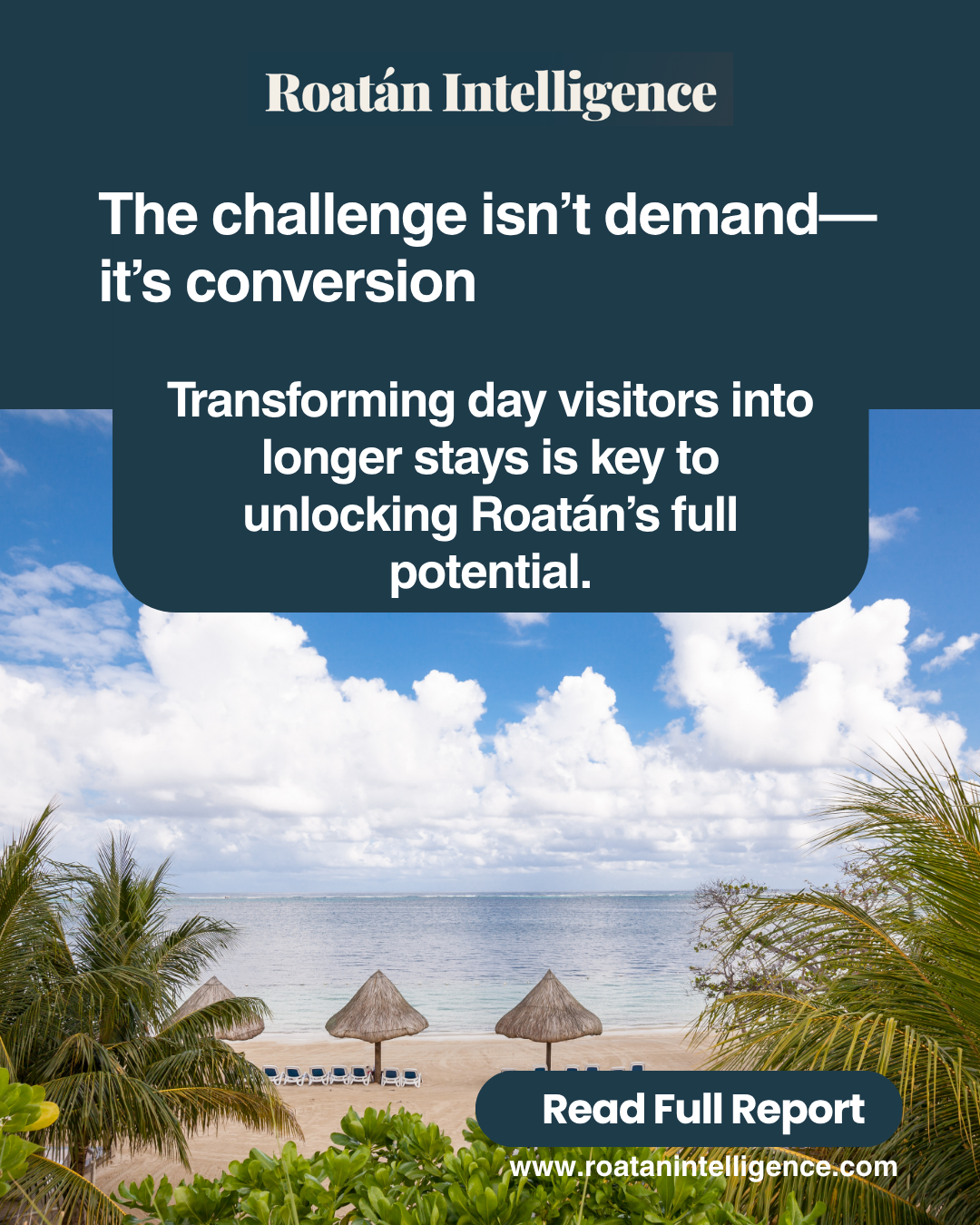
First, the focus is on converting cruise visitors into longer stays, particularly targeting seven-day itineraries that increase economic contribution per traveler. Second, there is a clear emphasis on protecting core assets, including the reef and Garífuna culture, as foundational elements of the island’s identity.
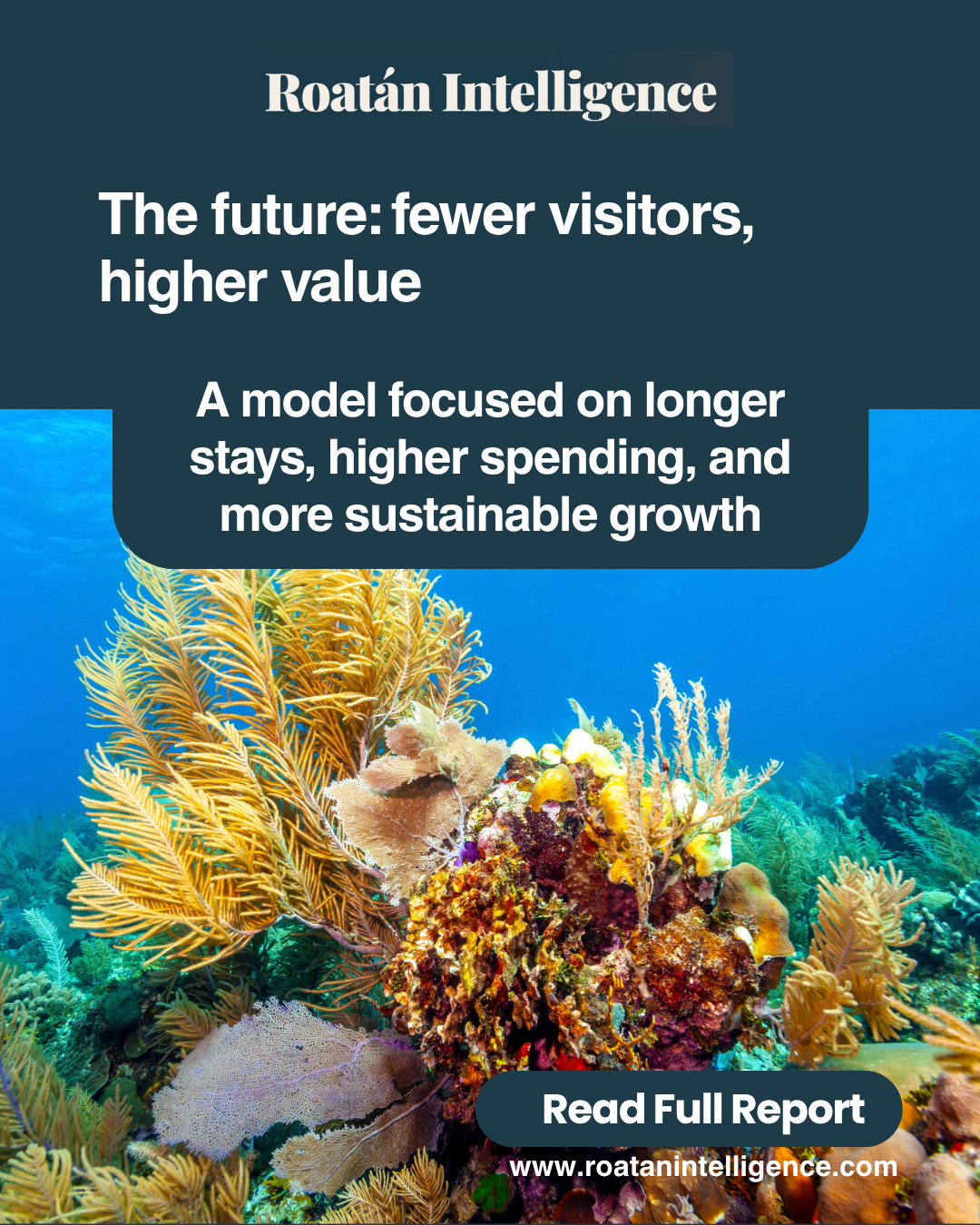
Third, the strategy prioritizes correcting safety perceptions through digital communication, ensuring that the destination’s narrative aligns with its current reality. Fourth, it calls for greater coordination among stakeholders, unifying the voice of the destination across public and private sectors. Finally, the model aims to generate higher revenue with fewer, higher-value visitors, shifting away from volume as the primary metric of success.
Each of these pillars is explored in depth within the full report.
Looking ahead: Longevity Roatán and the future of the destination
As part of this long-term vision, Hall introduced Longevity Roatán, a forward-looking initiative targeting the rapidly growing global wellness and longevity market, projected to reach $5.6 trillion by 2027.This segment is characterized by longer stays—often exceeding two weeks—and a strong alignment with high-value tourism principles. By positioning Roatán within this space, the island can attract visitors who seek not only leisure, but also health, well-being, and personal development experiences.The report highlights how this segment represents a key opportunity for the island to diversify its tourism base while increasing economic impact per visitor.
From growth to transformation
Roatán’s current trajectory presents a unique opportunity. The island has already achieved significant visibility and demand; the challenge now lies in refining its model to ensure sustainable and high-impact growth.The transition from a volume-based approach to a value-driven strategy is not immediate, but it is essential. By aligning its natural assets, cultural identity, and strategic vision, Roatán has the potential to redefine its position in the Caribbean—not just as a popular destination, but as a leading example of how tourism can evolve toward quality, sustainability, and long-term value.For a deeper understanding of the data, insights, and strategic roadmap shaping this transformation, explore the full Roatán Intelligence Report.